Alexander Ryu, MD: AI Innovation and the Changing Role of Healthcare Technology
Introduction
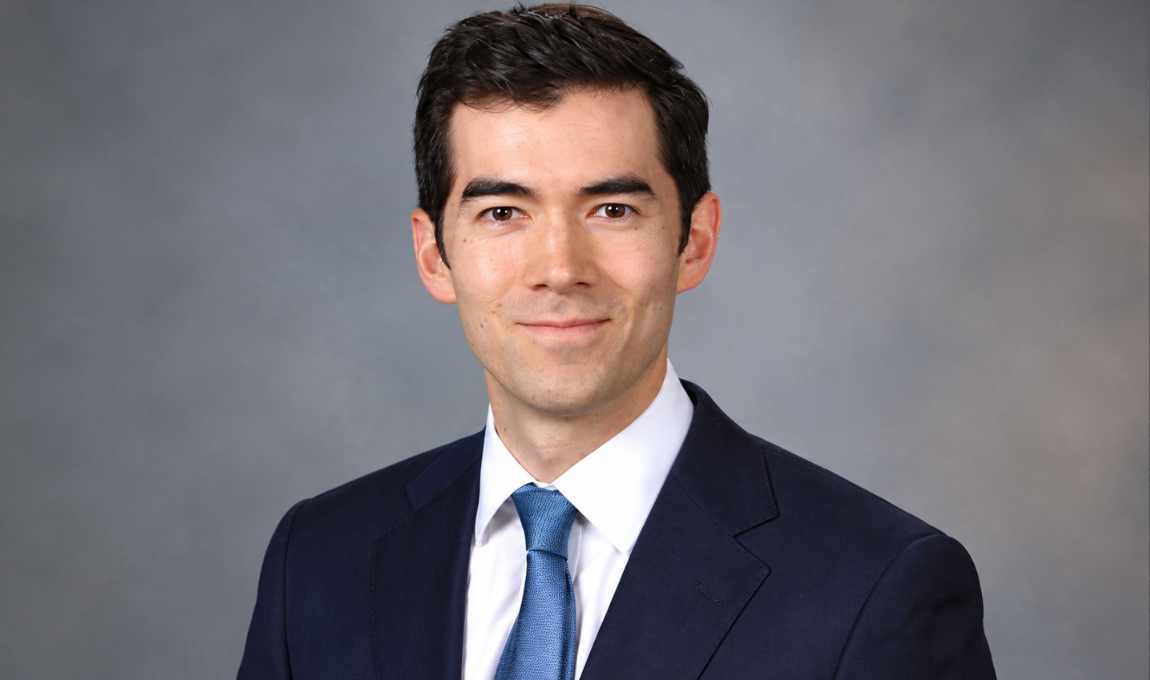
Artificial intelligence is taking over an increasing number of healthcare fields where clinicians are required to work with large amounts of information. Alexander Ryu, MD, is the Vice Chair of AI Innovation in the Department of Medicine at Mayo Clinic. He is a physician and data scientist whose work revolves around developing, validating and translating AI and machine-learning tools into clinical practice. This is seen as an opportunity for Mayo Clinic to improve patient outcomes, research discoveries, and clinician tools that lead to the more efficient execution of clinicians day-to-day work.
The significance of Alexander Ryu Mayo Clinic work is more focused on the use of AI as a technology trend than how it could be tested and integrated into actual healthcare environments. His research involves clinical operations, electronic health records, medical-record review, predictive models and genomic data.
Professional Profile
| Detail | Information |
| Name | Alexander Ryu, MD |
| Role | Vice Chair of AI Innovation |
| Organization | Mayo Clinic |
| Academic Rank | Assistant Professor of Medicine |
| Primary Clinical Area | Hospital Internal Medicine |
| Focus | AI, machine learning, data science and clinical innovation |
Mayo Clinic’s faculty profile identifies Alexander Ryu MD as a consultant in the Division of Hospital Internal Medicine. He earned his MD from Harvard Medical School and completed internal medicine residency training at Mayo Clinic. His current work combines clinical medicine with data science and AI development.
A Practical Approach to Healthcare AI
The work of Alexander Ryu Vice Chair of AI Innovation represents a pragmatic approach to artificial intelligence. His research is not focused on the creation of an isolated product but rather on whether models could be created, validated and integrated into existing clinical systems.
Mayo Clinic’s Hospital Internal Medicine Innovation Laboratory, under the leadership of Ryu, combines data science, informatics, AI, software development and clinical expertise to conduct research in areas such as decision support, optimizing electronic health records, analyzing multi-omics data, cloud computing and virtual care.
This approach is important because a model can perform well in a research environment and still face challenges when introduced into everyday clinical workflows. Factors such as data quality, usability, workflow integration and model performance across different settings all matter.
AI Applications in Modern Healthcare
| Area | How AI Can Support Healthcare |
| Clinical workflows | AI can organize information and support clinicians working with complex records. |
| Hospital operations | Predictive models can assist with admission decisions and resource distribution. |
| Medical research | AI can analyze clinical, genomic, text and imaging information together. |
| Record review | Large language models can help extract and summarize relevant information from medical records. |
One area in which Mayo Clinic is pursuing artificial intelligence innovations is in hospital efficiency. Ryu’s research group has been working on AI models that could help to distribute resources in a hospital and make decisions about emergency-department disposition. Mayo Clinic notes that some of these tools have been implemented in practice, while others are being studied for their clinical impact.
Another area of focus for Ryu’s team is medical-record review. Physicians and other healthcare professionals may need to analyze large amounts of narrative information before they can make decisions about diagnosis or treatment. His team is looking at large language models that could help extract and summarize relevant information from health records, streamlining the chart-review process and supporting clinical decision-making.

From Research Model to Clinical Tool
One of the key aspects of Alexander Ryu healthcare AI work is its emphasis on connecting research and implementation. The Mayo Clinic cites Ryu, who supervised the development and implementation of the institution’s first internally developed machine learning model within its electronic health record system.
Such activities highlight an essential distinction in AI transformation in healthcare. While developing a predictive model is only one step, healthcare organizations must also identify how a tool fits into clinical workflows, how its performance should be monitored, and how clinicians should use its output.
Mayo Clinic’s research program encompasses AI feasibility assessments, model design, development, and validation, as well as implementation science and study design for AI and informatics tools.
Supporting Earlier Intervention
In addition, it can be utilized to spot trends that would not necessarily be apparent at first glance. One of the projects conducted by the Mayo Clinic which deals with the application of AI in medicine is related to the work of Ryu. According to the researchers, their model manages to predict delirium in hospitalized patients. After the algorithm was tested and peer-reviewed, it was incorporated into the hospital’s electronic health records, aiming to provide delirium care in an improved, earlier manner.
The very concept is simple: in case there is a chance that a patient is at higher risk for a certain condition, healthcare professionals have more time to observe and provide treatment. Moreover, such systems do not mean to substitute doctors but rather assist them in their tasks. This is one example of how innovations in medicine go hand in hand with solving a particular issue.
Research Across Different Types of Medical Data
Health care data comes in many forms and includes both structured electronic medical records, physician notes, medical images, laboratory tests, and genomic information. The integration of these different data types is an important area for medical AI innovation.
Ryu’s work involves foundational AI models that combine genomic sequence data with clinical, text, and imaging information to identify relationships between genetic characteristics, patient phenotypes, and outcomes. Mayo Clinic cites this work as an example of how they are pursuing more personalized medicine and multimodal data analysis.This line of research exemplifies a growing trend in artificial intelligence research in health care: using multiple sources of information together, rather than analyzing each dataset separately.
Responsible Development Matters
The development of healthcare artificial intelligence also raises questions about fairness and reliability, as a particular model may show varying levels of performance across different populations of patients, clinical settings or data setsRyu’s group is also working on approaches to evaluate and address these biases, Mayo Clinic reports. The article states that the team is developing methods to assess how different models perform equitably and approaches to counteract the bias if it is found.This is an important area of research since it concerns not only the technical performance of these systems. Healthcare facilities will need to know how to apply such technology in practice, taking into account its interactions with a variety of patients and populations.
Areas of Potential Impact
| Impact Area | Relevance |
| Clinical workflows | AI may reduce time spent locating and reviewing complex information. |
| Patient care | Predictive tools can help identify risks that may require earlier attention. |
| Research | Multimodal AI can support analysis of clinical and genomic datasets. |
| Hospital operations | Predictive models can assist with patient flow and resource planning. |
Why Physician-Led AI Development Matters
The combination of medical training and technical research is a notable feature of Ryu’s professional profile. Mayo Clinic identifies him as both a physician and data scientist, with work spanning AI development, validation and implementation.That combination can help bridge technical development with the realities of clinical practice.
A successful healthcare technology must be fit to the environment in which the clinicians actually work. It will also have to tackle a clearly defined problem and deliver information that can be interpreted appropriately.For organizations looking to explore Mayo Clinic healthcare technology and broader digital-health models, this kind of physician-led development is a model of how their clinical expertise, data science and software development can work together.
Key Takeaways
| Takeaway | Summary |
| Clinical + technical expertise | Ryu combines medicine, data science and AI research. |
| Practical implementation | His work includes developing and deploying AI tools in clinical environments. |
| Broad research scope | Projects include hospital operations, medical records, genomics and predictive models. |
| Responsible AI | Research also addresses model validation, equity and potential bias. |
Conclusion
Alexander Ryu, MD, represents a growing type of healthcare leader, whose work lies at the intersection of clinical medicine and technology. As Vice Chair of AI Innovation at Mayo Clinic, his research involves the practical application of artificial intelligence and machine learning in clinical workflows, hospital operations, medical-record analysis and multimodal research. The broader lesson to pull from this is that the future of AI healthcare will be a balance between increasingly capable models, careful validation, thoughtful implementation and meaningful clinical use. The most useful systems are likely to be those that fit naturally into healthcare workflows while giving clinicians better information and more time to focus on patient care.
Mayo Clinic’s work in this area demonstrates that healthcare technology and innovation can be approached as a clinical and organizational challenge as much as a technical one. Ryu’s combination of medical practice, data science and AI research represents one possible approach to this type of problem in action.
Read More: Brendan Foody: The Young Entrepreneur Transforming AI Hiring Through Mercor