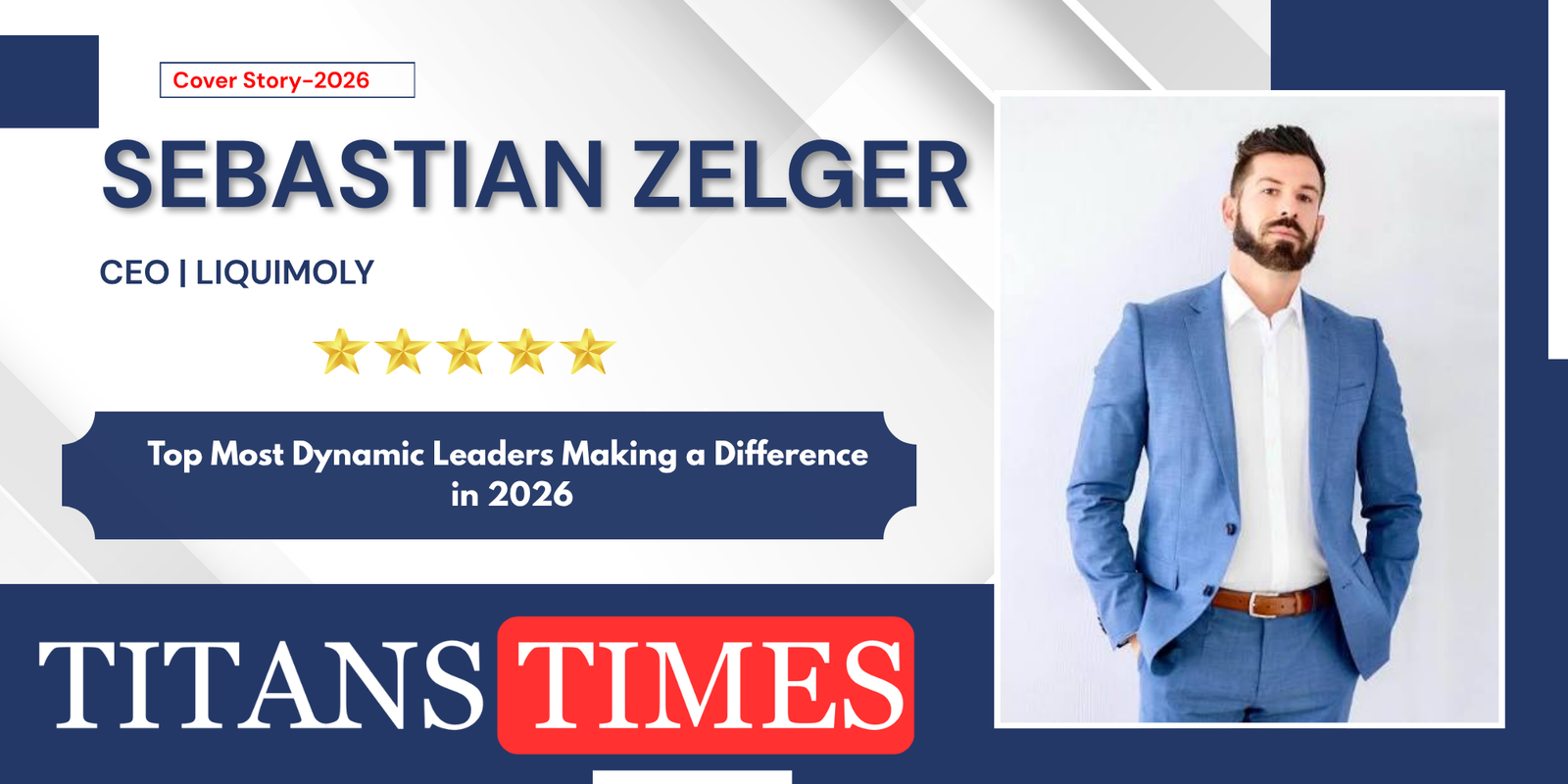
Sebastian Zelger: Driving Innovation, Inspiring Change, and Redefining Leadership in the Automotive Industry
CEO | LIQUI MOLY
Top Most Dynamic Leaders Making a Difference in 2026
Exploring the power of visionary leadership, technological innovation, and strategic thinking in shaping the future of the global automotive industry.
A New Perspective on Leadership in a Changing World
It goes without saying that with rapid changes in technology, consumer demands, and the ever-growing competition, modern successful leadership requires much more than efficient management. The latter includes vision, adaptability, resilience, and readiness to transform along with dedication to organizational values.
Undoubtedly, the automotive sector lies at the heart of the process mentioned above. It involves various areas such as electric mobility and advanced engine development, sustainability, and digital transformation to name a few; companies try to rethink their processes of product creation, customers’ needs, and future trends.
One of the most dynamic leaders from the automobile industry, who was featured in the “Top Most Dynamic Leaders Making a Difference in 2026” edition of Titans Times Magazine, is Sebastian Zelger. The magazine published him as a LIQUI MOLY CEO on its cover.
This feature is a good way to analyze the changes that occur in the responsibilities of the executive leaders. Innovation, product quality, trust from customers, and efficiency still matter much in the automobile industry.
While facing more complicated business environment, leaders’ skills change and grow to incorporate both old ones and new possibilities as well as stimulate cooperation and innovation that create business value.
The Automotive Industry: A Landscape of Opportunity and Transformation
The global automotive sector has long represented engineering excellence, technological progress, and industrial innovation. However, the pace of transformation has accelerated significantly.
Changing mobility preferences, evolving regulatory requirements, environmental considerations, and advances in vehicle technology are influencing how automotive businesses operate.
For companies associated with automotive lubricants, additives, maintenance products, and vehicle care, these developments create both challenges and opportunities.
Customers increasingly expect products that support performance, reliability, efficiency, and compatibility with modern vehicle technologies.
At the same time, businesses must respond to diverse regional markets, changing distribution channels, and rising expectations for product information and technical support.
LIQUI MOLY operates within this demanding environment as a recognized automotive lubricants and additives brand.
Its industry context illustrates why strategic leadership matters. Maintaining a strong market presence requires organizations to understand customer needs, support product development, strengthen partnerships, and adapt to changing technologies.
For executives operating in this sector, the challenge extends beyond responding to immediate market demands. It involves preparing organizations for developments that may reshape the automotive landscape over the coming decade.
Visionary Leadership: Connecting Strategy with Purpose
A compelling business vision provides direction, but meaningful progress depends on turning that vision into practical action.
Effective leaders understand that ambitious objectives must be supported by clear priorities, capable teams, and disciplined execution.
In a competitive automotive environment, strategic decisions may involve product innovation, market expansion, operational improvements, customer relationships, and investment in emerging technologies.
Each decision must be evaluated against the organization’s capabilities and long-term goals.
Leadership also requires the ability to recognize which elements of a business should evolve and which established strengths deserve protection.
For an automotive brand, reputation is built through years of customer experiences, product performance, and consistent service.
Innovation should therefore strengthen customer confidence rather than undermine the qualities that originally earned it.
The broader leadership challenge is to create a balance between ambition and responsibility.
Organizations that pursue change without clear direction may struggle to translate investments into measurable outcomes. Conversely, businesses that resist necessary adaptation risk falling behind changing market expectations.
Strong leadership brings these competing priorities together through thoughtful planning, communication, and execution.
Innovation as a Foundation for Sustainable Business Growth
Innovation is frequently described as the driving force behind competitive advantage. Yet successful innovation is not simply about introducing new products or adopting emerging technologies.
It begins with understanding customer challenges and identifying opportunities to deliver better solutions.
Within the automotive industry, innovation may involve improved product formulations, enhanced manufacturing processes, digital customer experiences, or more efficient supply-chain operations.
As vehicle technologies evolve, companies serving the automotive aftermarket must continually assess how their products and services remain relevant.
Electric vehicles, hybrid powertrains, advanced combustion engines, and increasingly sophisticated automotive systems are creating different maintenance and performance requirements.
These changes encourage organizations to invest in technical knowledge, research, product development, and workforce capabilities.
However, innovation also requires commercial discipline.
Not every technological trend will create lasting value. Business leaders must evaluate market demand, operational feasibility, financial implications, and customer benefits before committing resources.
The organizations best positioned for sustainable progress are often those that combine curiosity and experimentation with a clear understanding of their core business.
For established automotive brands, this balance can help preserve existing customer relationships while creating opportunities in emerging markets.
Building Trust Through Quality and Consistency
Among companies dealing in industries where product reliability affects the level of confidence that consumers have in them, trust is a crucial asset for the organization.
Automobile buyers will expect products which are capable of fulfilling the right performance needs and which help maintain their vehicles.
Commercial associates such as distributors, services professionals, and retailers will expect consistency and reliable relationships.
For companies operating under such conditions, quality is not just a feature of the product. It affects reputation, customer loyalty and competitiveness in the industry.
Trust is built through experience.
Product information, services responsiveness, distribution consistency, and communication are some of the things which create strong relationships.
The leaders of the organizations are vital in ensuring that such expectations are met throughout the organization.
An organization may have a very ambitious marketing approach. But what will make the organization last will depend on how they fulfill the promises they have made.
That is why organizational culture is important.
Where employees are aware of the need for quality and accountability, they will help in making decisions in the organization.
In today’s competitive global market, trust becomes as important as growth.
Empowering People and Encouraging Collaboration
Behind every successful organization are individuals whose knowledge, creativity, and commitment turn business strategies into practical results.
Modern leadership increasingly emphasizes the importance of empowering employees, encouraging collaboration, and creating opportunities for professional development.
This is particularly relevant in technically demanding industries, where expertise may be distributed across research, manufacturing, sales, marketing, logistics, and customer service.
Each function contributes a different perspective to organizational performance.
Effective leaders recognize that valuable ideas can emerge from every level of a company.
Encouraging communication between departments can help organizations identify operational challenges, improve processes, and respond more effectively to customer needs.
Equally important is establishing clear expectations.
Employees are better positioned to contribute when they understand organizational objectives, their individual responsibilities, and how their work connects to broader priorities.
A culture that combines collaboration with accountability can support both innovation and consistent execution.
As businesses prepare for future challenges, developing adaptable teams and emerging leaders will remain an essential part of long-term organizational strength.
Navigating Global Markets with Strategic Agility
Operating in an interconnected global economy creates opportunities for expansion, but it also introduces considerable complexity.
Consumer preferences, economic conditions, regulatory expectations, distribution structures, and competitive pressures can differ substantially between markets.
Automotive businesses must therefore balance international consistency with an understanding of local requirements.
A strategy that performs effectively in one region may require adjustments elsewhere.
Successful international operations depend on market knowledge, reliable partnerships, responsive supply chains, and the ability to make informed decisions.
Strategic agility becomes especially valuable when external conditions change.
Fluctuating costs, technological developments, evolving customer preferences, and supply-chain disruptions can influence organizational priorities.
Leaders must be prepared to reassess plans without losing sight of long-term objectives.
This requires accurate information, strong communication, and the willingness to adapt when circumstances demand a different approach.
The broader lesson is that global growth is not solely about entering additional markets. It is about developing the capabilities necessary to serve those markets consistently and responsibly.
Sustainability and the Future of Automotive Excellence
Sustainability is becoming an issue of greater concern in the entire automotive supply chain.
Firms at various stages of the automotive value chain are considering the possibilities of increased efficiencies, decreased wastage, and the need to meet changing expectations with regard to the environment.
Where the focus is on firms providing automotive maintenance products, the issue of sustainability could include considerations such as packaging, production efficiency, proper use of products, and changing needs arising from vehicle technologies.
Technical accuracy and business reality need to be considered when addressing the issues.
To achieve any significant success, organizations have to assess the environmental impacts of their operations while ensuring that their products remain effective, safe, and quality.
The leadership has an important part to play in the integration of the sustainability agenda into the decision-making process.
Instead of handling environmental issues as something separate, businesses may consider the ways in which efficiency and innovation in relation to customer expectations can help to meet these concerns.
Digital Transformation and the Power of Customer Understanding
Digital technologies are changing the relationship between businesses and their customers.
Online platforms, data analytics, digital communication, and connected business systems are creating new ways to understand market needs and improve service delivery.
Within the automotive industry, these capabilities can support product discovery, customer education, distribution management, and operational efficiency.
However, digital transformation is most valuable when it solves a clearly defined business problem.
Introducing technology without understanding its purpose can create additional complexity rather than improvement.
Effective leaders must determine how digital investments contribute to customer experience, employee productivity, and organizational performance.
They must also consider cybersecurity, data protection, system reliability, and the skills required to use new tools responsibly.
The future of customer engagement will likely involve a combination of digital convenience and trusted human relationships.
Businesses that successfully integrate these elements can create more responsive experiences while maintaining the personal connections that support long-term loyalty.
The Leadership Qualities That Will Shape Tomorrow
As the automotive industry continues its transformation, the expectations placed on senior executives will become increasingly demanding.
Future-ready leadership will require technological awareness, strategic discipline, emotional intelligence, and an understanding of changing global markets.
Leaders will need to make decisions with incomplete information while remaining accountable for outcomes.
They must encourage innovation without compromising reliability, pursue growth without overlooking operational resilience, and respond to emerging opportunities while protecting customer trust.
Continuous learning will also become essential.
Technologies, regulations, and business models will continue to evolve, requiring organizations to strengthen capabilities and reconsider established assumptions.
Perhaps most importantly, leadership will increasingly depend on the ability to bring people together around shared objectives.
Even the most sophisticated business strategies require committed teams capable of turning ideas into results.
The strongest organizations will be those that combine strategic ambition with a culture of collaboration, adaptability, and responsibility.
Looking Ahead: Leadership That Creates Meaningful Difference
The coming years will bring new opportunities and uncertainties for the automotive industry.
Advances in mobility technology, digital services, manufacturing processes, and customer engagement will continue to influence how businesses compete.
For established brands, future success will depend on the ability to recognize relevant developments while preserving the qualities that customers value.
Leadership will remain central to this process.
The ability to establish direction, encourage innovation, maintain organizational trust, and respond thoughtfully to changing conditions will shape how companies approach the next phase of industry transformation.
As Titans Times Magazine features Sebastian Zelger in its “Top Most Dynamic Leaders Making a Difference in 2026” edition, the cover highlights the importance of examining executive leadership within this evolving business landscape.
The most meaningful contributions of modern business leaders are not always defined by a single decision or milestone.
They emerge through consistent attention to people, performance, innovation, and the long-term health of the organizations they serve.
Ultimately, dynamic leadership is about creating the conditions in which businesses can adapt, teams can develop, and innovation can translate into enduring value.
That combination of vision, responsibility, and purposeful execution will continue to define leadership excellence in 2026 and beyond.