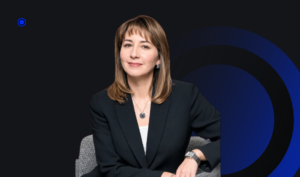

Ashley Beecy: Sutter Health’s Chief AI Officer and the Growing Role of Healthcare AI
Artificial intelligence is becoming an important part of healthcare but putting AI into a real clinical environment is considerably more complicated than developing a promising algorithm. Patient safety, physician workflow, data quality, governance and trust all matter. That is where Ashley Beecy, MD, FACC occupies a visible role. As Chief AI Officer at Sutter Health Beecy leads enterprise AI strategy, governance and implementation across the health system. Her background combines medicine, computer engineering, clinical informatics and technology giving her a perspective on how artificial intelligence can be introduced into healthcare organizations.
Her work provides a case study in what the modern Chief AI Officer, in healthcare role can involve: not simply choosing AI tools but determining where they can genuinely support clinicians and patients and how they should be governed.
Ashley Beecy’s Professional Background
Ashley Beecy’s career did not start solely in medicine. She studied computer systems engineering at Boston University then earned a degree from Albert Einstein College of Medicine. After that Ashley Beecy trained in medicine, cardiovascular medicine and clinical informatics.
Before taking her role Ashley Beecy was the Medical Director of Artificial Intelligence Operations at NewYork-Presbyterian and also a faculty member at Weill Cornell Medicine. At NewYork-Presbyterian Ashley Beecy handled AI governance, evaluation and implementation while keeping her focus on cardiology and cardiovascular medicine.
Ashley Beecy’s experience goes beyond the health sector. Weill Cornell’s biography shows that she spent ten years in industry working at IBM and Citi. This mix of engineering, business, medicine and informatics explains why Ashley Beecy sees AI as a tool, for real‑world application, not abstract technology.
Ashley Beecy – Professional Snapshot
| Area | Confirmed information |
| Current role | Chief AI Officer, Sutter Health |
| Medical background | Cardiologist and clinical informatics specialist |
| Undergraduate education | Computer Systems Engineering, Boston University |
| Medical degree | Albert Einstein College of Medicine |
| Previous AI leadership | Medical Director of AI Operations, NewYork-Presbyterian |
| Academic affiliation | Weill Cornell Medicine |
| Professional focus | AI strategy, governance, implementation and digital health |
Sutter Health describes Beecy as the organization’s first Chief AI Officer. In the role, she oversees the health system’s AI strategy and works with clinical, digital and operational teams on implementation.
Ashley Beecy and Sutter Health’s AI Strategy
The story of Ashley Beecy at Sutter Health is especially important because big healthcare systems deal with challenges compared to technology companies. An AI model can do well in tests. Still cause issues if it does not fit easily into how doctors and nurses work every day.
Sutter’s public documents talk about a strategy that includes AI rules and the use of tools designed to help with patient care and the way medical staff work. Beecy’s position is at the place where technology, medicine, and business choices meet.
One example is when doctors write notes about patients. Sutter has mentioned using AI to help with this as part of its plans to use AI in health care. The goal is not just to make a job the bigger question is whether technology can make the work easier so doctors can spend more time with patients.
Another part is when doctors look at X-rays and other images. Sutter has said it works with Aidoc, an AI system that helps with the way radiologists do their jobs. According to Sutter than 10,000 cases were checked before the system started working, and the results were compared with what doctors saw. Sutter has also said that AI alerts helped find problems like blood clots in the lungs, bleeding in the brain, weak spots in blood vessels, and blocked blood vessels.
These examples show an idea in Sutter Health’s artificial intelligence efforts: putting new technology into use needs real tests in the medical world and making sure it fits into how doctors and nurses work along with the technology itself
.Healthcare AI Focus Areas
| Focus area | How AI can support healthcare |
| Clinical documentation | Reduce time spent creating routine documentation |
| Medical imaging | Flag potentially significant findings for clinical review |
| Clinical decision support | Help clinicians access relevant information and evidence |
| Operations | Identify opportunities to streamline repetitive processes |
| Governance | Establish processes for responsible AI evaluation and deployment |
From Healthcare AI Strategy to Practical Use
The conversation around Ashley Beecy and healthcare AI is not about whether AI’s there. It is about how AI should be used in a way.
Sutter has also announced a partnership with OpenEvidence to bring evidence-based AI-powered information into the work that doctors do every day. Beecy said the goal is to help doctors get medical evidence more easily when they are making decisions about patients.
This is a point. Artificial intelligence does not take over the job of making decisions. Instead tools can be made to give information or find signals that doctors can look at.
The same way of thinking is seen in Beecys work at NewYork-Presbyterian, where she worked on AI governance the systems that support AI and how to use AI across the organization. Weill Cornells description of her work says she has been involved in health, informatics and making sure AI is used safely and well in healthcare.
For healthcare organizations this means that a good strategy for healthcare AI and a program, for innovation need many different parts to work together.

Potential AI Applications in Healthcare
| Application | Potential value | Important consideration |
| Imaging assistance | Earlier identification of possible findings | Physician review and validation |
| Documentation | Less administrative burden | Accuracy and workflow integration |
| Evidence retrieval | Faster access to medical literature | Source quality and clinical context |
| Predictive analytics | Identification of potential risks | Data quality and model performance |
| Workflow automation | Reduction of repetitive tasks | Appropriate human oversight |
A separate example comes from research. Industry publication IMO Health reported Beecys discussion of tools being developed to identify heart failure by predicting abnormal peak VO₂ from echocardiograms an example of how AI research can explore information contained in routinely collected clinical data.
Such applications demonstrate why artificial intelligence in healthcare organizations requires both expertise and clinical understanding. The quality of an AI system ultimately depends on more, than its algorithm. The surrounding data, workflow, evaluation process and human oversight are equally important.
What Ashley Beecy’s Role Says About AI and Digital Health Leadership
The emergence of roles such as Chief AI Officer reflects a broader shift in healthcare technology leadership. AI is moving from isolated pilot projects toward enterprise-level questions involving governance, implementation, safety and measurable value.
Beecy’s appointment places those questions within the context of a physician-led health system. Her career across engineering, finance, medicine and informatics also illustrates how multidisciplinary experience can intersect in modern AI and digital health leadership.
She was also named by Reuters to its 2026 Trailblazing Women in Healthcare list, with Sutter highlighting her leadership in responsibly scaling AI across the organization.
In addition, HIMSS included Beecy in its 2026 AI Advisory Group, a group focused on healthcare AI education and programming.
Healthcare AI Leadership Themes
| Leadership theme | Why it matters |
| Governance | Helps establish responsible processes for AI adoption |
| Clinical partnership | Keeps technology connected to real care environments |
| Workflow integration | Determines whether tools are useful in everyday practice |
| Evidence and evaluation | Supports informed decisions about AI performance |
| Scalability | Moves successful concepts beyond isolated pilots |
Conclusion
Ashley Beecy is a type of leader in healthcare technology. She blends clinical know‑how with engineering, informatics, and enterprise AI skills. At Sutter Health, Ashley Beecy’s job covers AI strategy, governance, and rollout. The AI projects she handles range from documentation and imaging help to evidence‑based clinical information. The big point of Ashley Beecy’s work is that turning AI into a change in healthcare needs more than just new gadgets. It needs thought, proper rules, strong teamwork with doctors, and a clear sense of where AI can really help. As more healthcare groups test AI the role of leaders like Ashley Beecy gives a view of the tests and trials needed to move from AI experiments to responsible everyday use, in healthcare..
Read More: Women Business Leaders to Watch in 2026