Robbie Freeman and the Changing Role of Digital Health at Mount Sinai
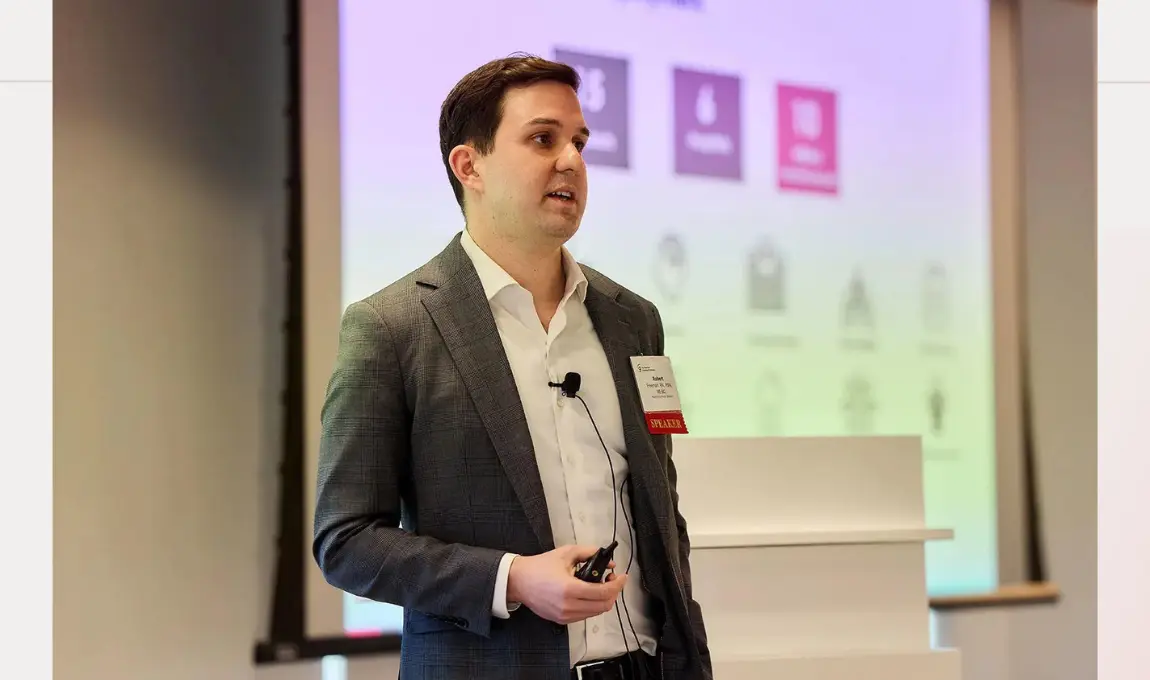
Robbie FreemanHealthcare Technology Executive at Mount Sinai Robbie Freeman is a healthcare technology executive whose work at Mount Sinai focuses on advancing digital technology, clinical informatics, artificial intelligence, and practical technology adoption. Current HIMSS materials name him as Chief Innovation Officer at Mount Sinai, but the same individual’s current profile at Mount Sinai shows him as Chief Digital Transformation Officer. Probably, the reason is that his work emphasizes the technology aspect, which is slightly different from the concentration on the clinical side. But overall, both positions define his work as focused on combining healthcare technologies and the needs of the patients and providers who have to use them, to create positive outcomes in healthcare. HIMSS
Professional Profile
| No. | Detail | Information |
| 1 | Name | Robbie Freeman |
| 2 | Position | Chief Innovation Officer / Chief Digital Transformation Officer |
| 3 | Organization | Mount Sinai Health System |
| 4 | Focus | Innovation, Digital Health, AI & Clinical Informatics |
Freeman’s work at Mount Sinai Health System started in nursing in order to become familiar with the clinical setting before transitioning into technology and leadership. Mount Sinai claims that his professional background includes the fields of clinical operations, innovation, digital experience, and informatics. He held positions such as the Vice President of Digital Experience and Chief Nursing Informatics Officer at Mount Sinai Health System
This career path is valuable to the new role because healthcare technologies are only useful in context. Even if a product is innovative and well designed, it may create more problems if clinicians and patients cannot easily access it or if the surrounding process is complicated..

From Innovation to Practical Digital Health
The discussion about Robbie Freeman Mount Sinai is closely related to the more general one, namely, how big healthcare groups can take digital ideas from development into mainstream medical practice. Mount Sinai has indeed generated a considerable number of digital and AI applications. Freeman noted that the company pursued a strategy of deploying them in the clinic, not leaving them on the drawing board. A 2026 report from Becker’s Hospital Review also highlighted Mount Sinai’s unified approach to governing digital and AI initiatives, focusing on the areas of impact: patient experience, operational effectiveness, quality, safety, and financial value. These are key areas in healthcare. Mount Sinai Reports.This helps explain the practical meaning behind Robbie Freeman digital health leadership. Digital transformation is not simply about introducing another application or platform. It involves deciding which problems are worth solving, involving the people who use the technology, testing the results, and determining whether a solution can work at scale.
Key Innovation Areas
| No. | Area | Healthcare Relevance |
| 1 | Digital Health | Improving access and engagement |
| 2 | Healthcare Technology | Supporting modern care delivery |
| 3 | Innovation | Developing practical healthcare solutions |
| 4 | Patient Experience | Making care more convenient |
One example of an innovation initiative is Mount Sinai’s work around pressure injury prevention. The clinical nurse suggested using artificial intelligence to identify patients who are at risk, and Freeman worked with clinicians, data scientists, and software engineers to collaborate on the solution in a co design process. Mount Sinai has reported that it began using the resulting predictive analytics tool in early 2024. Mount Sinai Health System
Other initiatives have involved applications of artificial intelligence to falls, delirium, and malnutrition. Mount Sinai has also shared results from using machine learning and natural language processing to help extract value from information documented in clinical notes. Mount Sinai Reports These examples give a sense of the kinds of healthcare innovation that are taking place at Mount Sinai. Notably, an underlying philosophy appears to be that clinicians and other professionals address a specific healthcare business challenge or need by working with technology, rather than focusing on the technology as an end in itself.
Why Digital Transformation Requires Clinical Perspective
The importance of Robbie Freeman Chief Innovation Officer leadership can also be inferred from his nursing background. Having worked at the bedside, Freeman climbed the hospital hierarchy to occupy the chief operating officer for clinical operations and innovation before becoming a CIO. Mount Sinai notes that his professional background includes “care, hospital administration, digital experience and enterprise technology.” Mount Sinai Health
That experience is invaluable in encouraging digital health innovation in ways that actually improve care. After all, the effective adoption of a digital tool often depends on less obvious factors that are not captured in a formal requirements specification. For example, a digital tool that has been developed to help nurses with specific tasks should be designed to require minimal extra documentation or avoid triggering inappropriate alerts. Freeman advocates for a co design approach in which clinicians are involved from the inception of an artificial intelligence (AI) project. Mount Sinai Health
Potential Areas of Impact
| No. | Area | Possible Impact |
| 1 | Patients | Better digital experiences |
| 2 | Providers | More efficient workflows |
| 3 | Healthcare Systems | Technology enabled services |
| 4 | Access | Greater digital connectivity |
This approach also fits into broader themes in health care technology and innovation. Advanced technologies now exist to help patients navigate the health care system, aid clinicians’ decision making, document care, identify risks, and improve operational efficiency. Each of these areas requires careful consideration.
Mount Sinai has placed emphasis on governance for its AI systems, including assessments of safety, ethical implications, privacy concerns, and how these systems are functioning in practice. Freeman has described AI as augmented intelligence, noting that technology should be used to support clinicians’ work and not dictate it. Mount Sinai Health System
The Broader Future of Digital Health
The career path of Freeman presents how the future of digital health is becoming multidisciplinary. Contemporary healthcare technology leaders need to comprehend clinical workflows, data, products, organizational priorities, and patient experience simultaneously.
His academic background reveals that combination. Mount Sinai reports that Freeman earned a Doctor of Nursing Practice from Yale University and a master’s degree from NYU’s Stern School of Business, while also graduating from Mount Sinai’s Phillips School of Nursing. His doctoral research focused on utilizing digital solutions to address health disparities and expand healthcare access. Mount Sinai Health System For organizations devising healthcare innovation strategies, that combination of clinical experience and technology leadership presents an informative model.
The aim is not necessarily to digitize every part of healthcare. It is to identify where technology can resolve a genuine issue and then construct the surrounding processes to render that solution valuable.
Key Takeaways
| No. | Takeaway |
| 1 | Innovation is increasingly connected to healthcare delivery. |
| 2 | Digital tools can support patient engagement and access. |
| 3 | Healthcare leaders help connect technology with practical needs. |
| 4 | Digital health continues to develop across healthcare organizations. |
Conclusion
The Robbie Freeman healthcare innovation story is a story about practice and technology. Robbie’s work at Mount Sinai encompassed digital experience, nursing informatics, AI applications, clinical workflow, and enterprise digitalization.
As the healthcare IT field develops, the issues to resolve will not always be technological but rather focused on usability, governance, clinical, and cost effectiveness, and whether the technology is appropriate for the practice and the patient.Thus, the role of a leader in innovation in modern healthcare is to create value from technology and apply it to practice effectively.
Read More: Titans Rex Therton :Leading with Vision, Purpose, and the Courage to Embrace Change